What Makes Closed Cell Foam Different
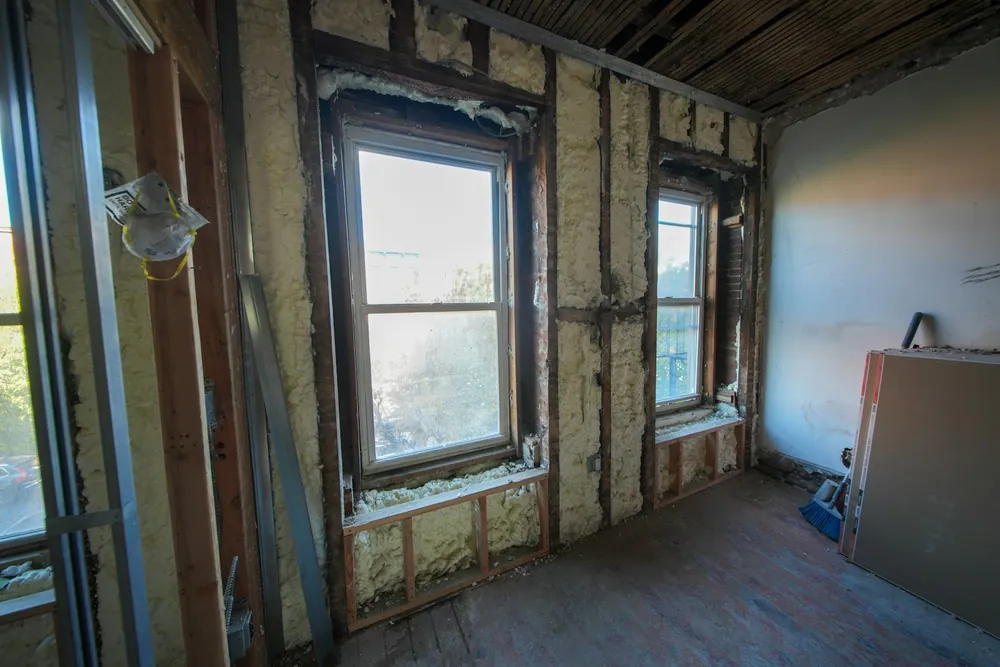
Closed cell spray foam sets into a hard, dense layer. Push a thumbnail into it and it barely gives. It’s usually yellow or cream, sometimes with a crusty surface where layers were built up. Because it’s rigid and grips whatever it touches, it’s the type that most worries surveyors — and the type that takes most care to remove.
It also stops moisture moving. That was part of the selling point, but in a pitched roof it can mean any water that does get in — from a cracked slate or a failed flashing — has nowhere to go.
How We Remove Closed Cell Foam
We don’t tear it off. Pulling rigid foam away from felt or boarding usually takes the felt with it. Instead we cut it back in layers with blades and scrapers, working close to the timber without gouging it. On slates or tiles laid without felt — common in older Exeter houses — we take extra care around the fixings, because some slates may have been relying on the foam to hold them.
Signs It’s Closed Cell
- Hard and rigid — it doesn’t squash under a finger
- Smooth or crusty surface, often yellowish
- Usually thinner than open cell foam, perhaps 50–80 mm
- Bonded tightly to timber and felt, with no gap
Not sure? A clear photo taken close to the foam, with a torch, usually lets us tell.
Why It Costs More
Hard foam takes longer per square metre, blades wear faster and more care is needed around fragile felt. On older roofs there may be follow-on repairs. Closed cell removal across a full loft usually sits in the upper band of our guide prices.
What it typically costs
Closed cell foam across a whole family-sized roof usually falls in the £5,000 to £8,000+ band; a single slope or a small loft costs less.
- Small or partial spray foam removalFrom £1,500 to £3,000
- Typical 3-bed loft spray foam removalAround £3,000 to £5,000
- Larger or difficult closed-cell foam removal£5,000 to £8,000+
- Per square metre guideRoughly £40 to £80+ per m²
Guide prices only. Every loft is different, so a confirmed quote usually needs an inspection or at least clear photos. A guide, not a fixed price. See how we price Exeter jobs.