Loft Spray Foam Removal in Exeter
Most of the spray foam we take out in Exeter is in an ordinary loft: sprayed onto the underside of the roof, between the rafters, sometimes down into the eaves and across the gable walls. It was usually sold as a quick insulation upgrade. Years later it turns up in a survey or a mortgage valuation, and the homeowner wants to know what it will take to get it out.
Loft spray foam removal is careful, manual work. We cut the foam away bay by bay, working along each rafter so the timber, the felt or membrane and the slates or tiles above are left in the condition they were in. Nothing is blasted, burned or dissolved.
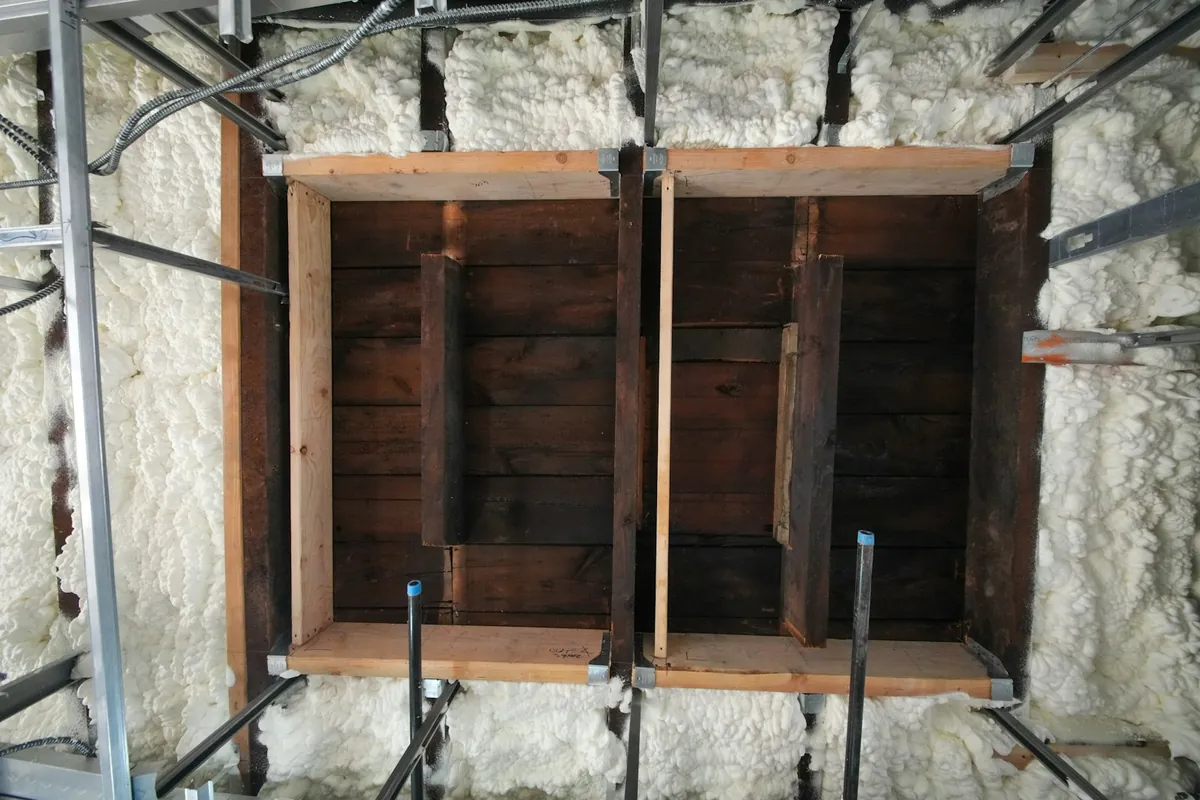
What a Typical Loft Job Involves
Protect the route
Dust sheets and floor protection from the front door to the hatch, and a sealed hatch surround so dust stays in the roof space.
Expose a test bay
We open one bay first to see how the foam is bonded and what it’s stuck to. That confirms the method for the rest of the roof.
Cut and lift the foam
Hand tools and long blades take the foam off each slope. Rigid foam is pared back in layers rather than pulled, to protect the felt.
Bag and carry out
Waste is bagged in the loft and carried out through the protected route, then taken to a licensed waste site.
Clean and photograph
Timbers are brushed down and every slope photographed, so you have a dated record of the roof with the foam gone.
Lofts We Commonly See in Exeter
Victorian and Edwardian terraces in St Thomas, Newtown, Mount Pleasant and Polsloe usually have small hatches and shallow roof spaces. The work is cramped but the area is modest.
Interwar and post-war semis in Whipton, Beacon Heath, Wonford and Alphington often have hipped roofs. Foam collects in the corners where the hips meet the ceiling, which takes time to reach.
Bungalows around Pinhoe, Exwick and Countess Wear can have very low pitches, so there’s little headroom at the edges. Even a small sprayed area can mean a full day on knees.
Newer estate homes on the city’s edges usually have trussed roofs. The diagonal webs get in the way and the trusses must not be cut, so we work around them by hand.
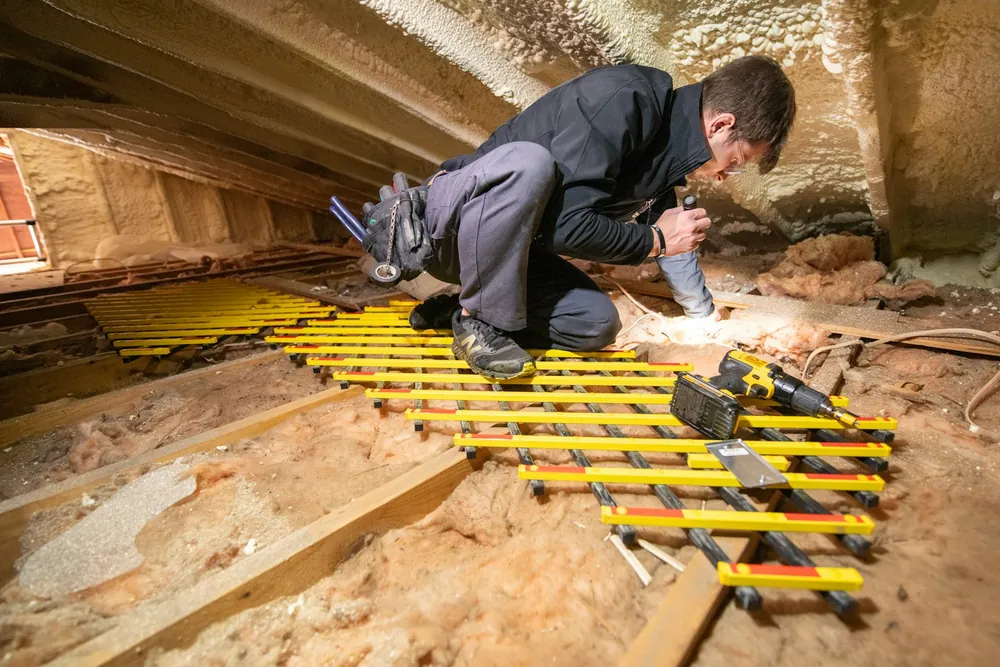
Boarded Lofts and Stored Belongings
We need clear access to every sprayed slope. Please empty the loft of stored items before we arrive. Where boarding has been laid over the joists, it usually stays put — we work from it — but boards that block the eaves may need lifting and refitting, which we’ll include in the quote.
After the Foam Is Out
A roof without foam needs insulating again, usually at ceiling level between and over the joists, with the roof space ventilated as it was designed to be. We can price that alongside the removal so the house isn’t left cold. If the photos show loose slates, damp timber or tired battens, we’ll say so plainly and you can get a roofer or carpenter to price the repair.
What it typically costs
A small Exeter terrace loft with soft foam on one slope is at the low end. A large hipped roof with hard foam across both slopes is at the top.
- Small or partial spray foam removalFrom £1,500 to £3,000
- Typical 3-bed loft spray foam removalAround £3,000 to £5,000
- Larger or difficult closed-cell foam removal£5,000 to £8,000+
- Per square metre guideRoughly £40 to £80+ per m²
Guide prices only. Every loft is different, so a confirmed quote usually needs an inspection or at least clear photos. A guide, not a fixed price. See how we price Exeter jobs.