Spray Foam Insulation Removal for Exeter Homes
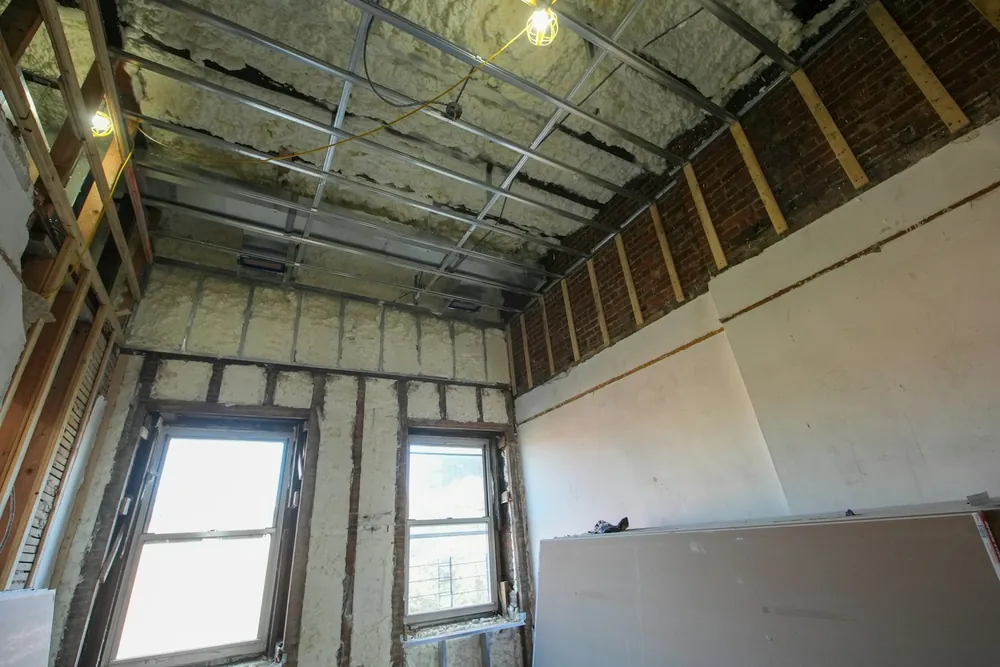
Spray foam insulation was marketed to a lot of Devon homeowners as a way to cut heating bills and “stop slipping slates”. In practice, many lenders, valuers and surveyors now treat it with caution, because once foam covers the underside of a roof nobody can see what the timbers, battens and felt are doing.
Spray foam insulation removal puts that structure back on show. Sometimes the whole roof needs clearing; sometimes a smaller, targeted job is enough. Our job is to work out which, and do it properly.
Three Ways to Deal With Spray Foam
1. Inspection opening
A small area — often one or two bays — is cleared so a surveyor can see the condition of the timbers and felt behind the foam. Useful when the question is “what’s under there?” rather than “it has to go”.
2. Partial removal
Foam is removed from one slope, an extension roof or a problem area where there are signs of damp. Common where foam was only applied to part of the house.
3. Full removal
Every sprayed surface is cleared, the roof space cleaned and photographed, and the loft is ready to re-insulate. Usually what’s needed when a lender has made removal a condition.
How We Decide What You Need
We start with what you’ve been told, in writing. A survey that says the roof “could not be inspected” is asking for something different from a lender letter that says “spray foam must be removed”. Send us the wording, and photos from the hatch if you can, and we’ll tell you which of the three options matches — and what it’s likely to cost.
We won’t push full removal where a smaller job answers the question. Equally, if there are signs of trapped moisture — a musty smell, stains on the ceiling below, foam that feels damp — we’ll tell you that leaving it isn’t a good idea.
What You Get at the End
- Before, during and after photos of each sprayed area, dated
- A short written summary: what was removed, where, and what we saw underneath
- Notes of anything a roofer or carpenter should look at
- Waste removed from site and disposed of properly
Check with your lender, buyer or surveyor what format they need before the work starts, and we’ll match it.
What it typically costs
Inspection openings and partial removal usually sit in the lowest band. Full removal of a family-sized loft is typically in the middle band.
- Small or partial spray foam removalFrom £1,500 to £3,000
- Typical 3-bed loft spray foam removalAround £3,000 to £5,000
- Larger or difficult closed-cell foam removal£5,000 to £8,000+
- Per square metre guideRoughly £40 to £80+ per m²
Guide prices only. Every loft is different, so a confirmed quote usually needs an inspection or at least clear photos. A guide, not a fixed price. See how we price Exeter jobs.
Removal isn’t a guarantee. Clearing the foam can answer a lender’s or buyer’s concern, but they make their own decision. Speak to your lender, broker or adviser before you commit.